
The future of caravan and leisure vehicle manufacturing could be shifting away from traditional plywood, as companies increasingly explore recycled alternatives designed to reduce waste, improve durability and cut production costs.
One material attracting growing attention is Supersede, a high-performance structural panel made entirely from recycled industrial plastic, developed as a direct replacement for marine-grade plywood and oriented strand board. With circular economy investment firm Closed Loop Partners supporting its production, the product is already being used across the leisure vehicle, marine and modular housing sectors.
The renewed focus on alternative materials comes amid ongoing volatility in global lumber markets, as well as wider concerns around tariffs and supply shortages. For RV and leisure vehicle manufacturers, this has accelerated interest in materials that offer both long-term reliability and more sustainable production methods.
Unlike traditional plywood, the recycled panels are fully waterproof and resistant to many of the issues that can plague caravans and motorhomes over time, including moisture damage and rot.
The manufacturing benefits are also significant. Because the material does not require sanding, sealing or drying, it can help streamline production and reduce labour-intensive processes. Offcuts can also be recycled back into the manufacturing system, supporting zero-waste initiatives increasingly being adopted across the automotive and leisure sectors.
The technology has already attracted major investment, with Closed Loop Partners backing further expansion of the company’s manufacturing capabilities ahead of a new production facility opening later this year.
For caravanners and motorhome owners, innovations like these could eventually translate into lighter, longer-lasting and lower-maintenance vehicles. Sustainability is also becoming a bigger consideration for buyers, particularly as manufacturers face pressure to reduce environmental impact across the full lifecycle of their products.
While plywood has long been a staple of caravan and leisure vehicle construction, changing material costs and advances in recycled manufacturing could mean the next generation of leisure vehicles looks very different beneath the surface.
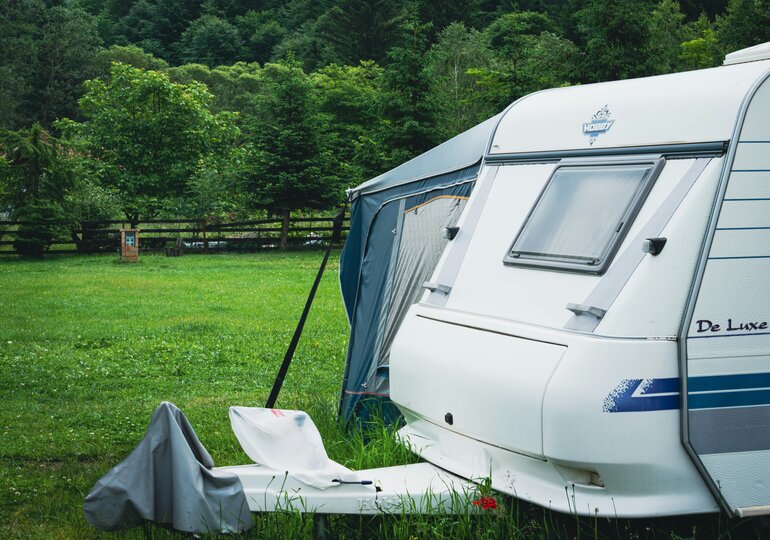
Image: Unplash