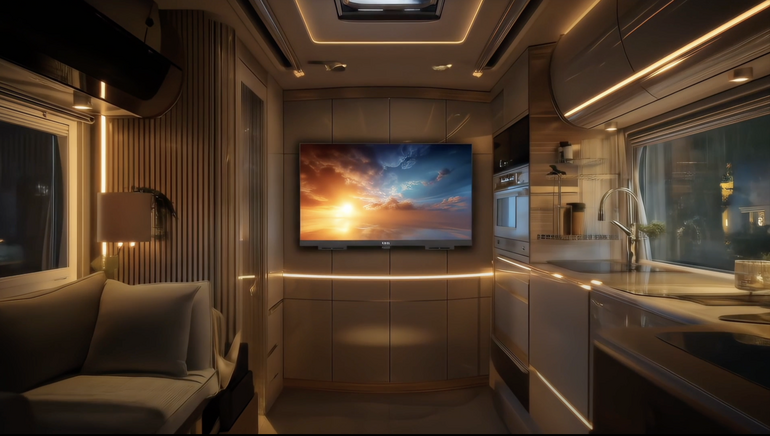
A new British-built smart TV could make life on the road significantly easier for caravanners and motorhome owners, thanks to a design that combines entertainment and internet connectivity in a single device.
Cello Electronics has unveiled the Voyager – described as the world’s first 12-volt smart TV with a built-in 5G router – aimed specifically at the leisure vehicle. Designed and manufactured in County Durham, the system removes the need for separate routers, MiFi devices and complicated cabling setups often associated with staying connected while touring.
Instead, users simply insert a SIM card directly into the TV, creating a Wi-Fi 6 network capable of supporting up to 32 devices while also providing access to streaming platforms, live television and gaming apps.
For many caravanners, reliable internet access has become almost as important as electric hook-ups, particularly as more people work remotely or stream content while travelling. The Voyager reflects a wider trend towards smarter, more connected leisure vehicles, where convenience and compact design are becoming increasingly important.
The TV runs on Samsung’s Tizen Smart platform and includes access to services such as Netflix, Disney+, Prime Video, YouTube and BBC iPlayer. Importantly for off-grid touring, it also supports both 12V and 240V power supplies, making it suitable for use with leisure batteries as well as mains electricity.
Brian Palmer, founder and CEO of Cello Electronics, said the company developed the product after years of experience supplying TVs to the leisure market.
“We’ve been making 12V TVs for the leisure industry for years, and we know this market inside out,” he added.
Marketing director Suzie Palmer said the company had listened closely to customer frustrations around connectivity while travelling and struggles with complicated setups.
“Voyager solves that. It’s a true all-in-one solution – just insert a SIM and you’re away,” she said.
As caravans and motorhomes continue to evolve into increasingly tech-focused spaces, products like this suggest the future of touring could become more connected and considerably less cluttered.
Image: Cello Electronics