When do caravan parks expect to reopen?

By Emma Dodd

Despite the uncertainty surrounding holidays caused by the pandemic, caravan parks need to make some tentative plans in order to be ready to reopen when it’s allowed.

With this in mind, some of the UK’s biggest holiday park operators have announced preliminary dates to start welcoming back visitors.

Of course, these are subject to change, depending on government guidelines, but they represent a glimmer of hope for caravan lovers everywhere.

Haven closed its holiday parks before the end of the 2020 season as coronavirus cases started to rise and the government advised against any non-essential travel.

It’s hoping to see families and other holidaymakers back on its 40 sites around the British coastline in March.

Hoseasons, which operates more than 600 parks, is looking to reopen as soon as possible, which means different dates for England, Scotland and Wales.

In England, that won’t be before March 8th, whilst Scotland will remain closed until at least March 1st, but Wales could invite tourists back as early as February 19th.

Butlins has abandoned its intentions to invite guests back on February 28th, pushing the expected date to March 14th.

Away Resorts would like to see families at its seven parks during the February half term, but as this draws nearer and there’s no further information from the government, that looks unlikely.

Pontins has made a statement suggesting it’s expecting to reopen its six holiday parks at the end of March.

Parkdean Resorts has not announced a reopening date for its 67 parks, but is accepting bookings for the Easter holidays.

Park Holidays closed its 33 sites in November and December, but is taking bookings for March 5th and beyond.

It has held off releasing a formal date to welcome back caravanners, but is readying its parks for visitors.

Park Leisure closed its doors to holidaymakers in Wales on December 19th and in England on January 5th and will reopen as soon as it’s allowed to do so.

Image credit: iStock/katrin888

Will pop-up campsites solve the staycation capacity problem?

By Emma Dodd

Despite the country still being in lockdown and no news of when travel restrictions may be lifted, staycation bookings have surged recently.

Fuelled by the idea that a trip abroad will be out of the question, Brits are booking holidays in the UK for the spring and summer hoping they will get some sort of escape.

This has led to concerns that demand for staycations will be so high there won’t be enough to go around.

Dan Yates, the founder of Pitchup.com, offered some reassurance in The Express recently.

He said: “Figures from VisitBritain show that of the 3.2 million bed-spaces in the UK, 1.4 million are non-serviced.

“Of those, outdoor accommodation accounts for some 65 per cent of bed spaces – three times more than ‘holiday dwellings’, such as cottages, bungalows, apartments, and more domestic holiday bed-nights than any other type of accommodation including hotels.”

Therefore, the trend for purchasing motorhomes and caravans that has been seen during lockdown will offer many people the freedom to get away and enjoy a holiday.

On top of this, the government has amended laws around pop-up campsites for 2021, which will increase the capacity for holidaymakers.

Such temporary campsites used to be restricted to operating for 28 days a year, but the government has doubled this to 56 days.

This means farmers’ fields and private land in stunning surroundings could be welcoming more caravan owners throughout the season, taking pressure off other areas.

While anyone who has their heart set on a specific site at the height of the school holidays would be advised to book sooner rather than later, there are wider options for those who simply want to get away.

As things are still uncertain, it’s important to check individual sites’ policies around cancellation, but most are offering reassurance that caravanners will not be out of pocket should their stay not take place due to Covid.

Delays to new caravan deliveries as demand outstrips supply

By Emma Dodd

Anyone purchasing a new caravan or motorhome in anticipation of travel rules being loosened may find they have to wait longer for delivery than they’d expect.

Caravanning is expected to continue to be a major trend as the ability to take trips abroad is restricted and manufacturers are struggling to keep up.

One leisure vehicle retailer has highlighted the delay in new caravans being delivered after its sales rose by 32 per cent year-on-year in the second half of 2020.

Robinsons Caravans told BusinessLive that the usual waiting time of eight weeks has now been doubled to 16 weeks.

It’s fully expecting that to increase further to 24 weeks, as the general population looks to join the motorhome community.

Paul Seabridge, chief executive at Robinsons Caravans, told the news provider: “The coronavirus crisis has resulted in a surge in demand for caravans as people are restricted from travelling overseas and can only holiday in the UK.

“Even after we are through the worst of the crisis, many people – especially those aged over 50 – will be nervous about travelling abroad so we expect demand for caravans to remain high.”

The fact that demand is outstripping supply for leisure vehicles has led to a number of companies branching out into the used motorhome market, including Robinsons Caravans.

Its new platform is uniting potential caravanners with their dream vehicles, as many Brits look towards staycations this summer for a change of scenery post-lockdown.

According to Robinsons Caravans, the industry is worth more than £6 billion in the UK, with as many as 50 million nights spent in a caravan annually.

Currently, there are around a million leisure vehicles in the UK split between those that are privately-owned and others that are rented to holidaymakers.

That number is likely to increase exponentially as budgets that would usually be spent on foreign travel are channelled into the purchase of a caravan or motorhome.

Image credit: iStock/welcomia

New Club members vow to continue touring post-Covid

By William Coleman

There has been a large influx of new members to the Caravan and Motorhome Club, many of whom say they’re keen to continue the staycationing lifestyle once things get back to normal.

The leisure industry has seen an unexpected rise in popularity during the pandemic, something nobody anticipated when the first lockdown was put in place.

Almost a year on, the world of caravan and motorhome holidays is the go-to option and the trend is likely to continue well beyond the shadow of coronavirus.

The Caravan and Motorhome Club said that over 70 per cent of new members have explained that it was the pandemic that encouraged them to look into joining the Club.

Now that these newcomers have had a taste of touring they say that the impact of Covid-19 will keep them taking touring trips in the future.

Last year the Club saw a record number of new recruits, with membership rising by 14 per cent.

Book with confidence

There is still some uncertainty regarding the timeframe for when sites can reopen, which is leading to people booking dates well in advance to ensure they have a space reserved.

Bookings with the Club from now until April 2022 will incur zero deposits and no cancellation or amendment fees.

The Club is accepting bookings for future stays throughout this year and until the end of April 2022. Each site has the Club’s Covid Secure guidelines in place to ensure that all distancing and cleaning measures are followed to keep staff and guests safe.

Nick Lomas, the Caravan and Motorhome Club’s director general, said: “We’re delighted to have welcomed so many new members, and it’s great that there is such an appetite for touring holidays from them and our longstanding members as soon as travel is allowed again.

“Campsite holidays make it easy to maintain social distancing, and you can book our Covid-secure sites with real confidence as we don’t require deposits and amendments are free.”

More demand for caravanning with four-legged friends

By William Coleman

The boom in staycations continues and now our four-legged friends are jumping in on the action. Caravan Sitefinder is experiencing a huge rise in demand for pet-friendly camping and caravan parks.

There are thousands of pet owners in the UK who love to take their pet with them when they go away. Despite the huge demand for dog-friendly sites, there are still many that don’t welcome four-legged friends.

Now, Caravan Sitefinder is seeing a large spike in search requests for this specific requirement. The figures suggest that 2021 will be Fido’s finest year, as more families opt for a UK holiday with their canine companions.

With over 4,800 pet-friendly sites in its listings, holidaymakers and their dogs can find the right location for their next staycation on the website.

Some sites have facilities in place just for furry friends, such as special exercise areas, dog-sitting services and guides to local dog-friendly attractions, restaurants and beaches.

On top of that, many sites even have separate washing machines and dryers just for pets’ bedding and accessories.

Michael Paul, owner of Caravan Sitefinder, said: “Many families hate being separated from their pets when they go away, but the staycation trend will mean far fewer sad farewells next year.

“Our website receives almost one million visitors a year, and in the past few months, the number of people searching for pet-friendly parks has more than doubled from last winter.

“We have thousands of parks which can solve their dog dilemma at a stroke, and parks and campsites are ideal places to stay as most are virtually traffic-free.”

Last year saw a rise in sales of dogs, as many households sought a lockdown companion. Following these pet purchases, Michael feels we are now seeing pet holiday searches as a direct result.

South-west holiday park shares its success with local school

William Coleman

A holiday company in Dartmoor has shared in its recent success, donating sports equipment to a local school.

Now, with some help from South West Holiday Parks, the rugby team at Stover School can practice their skills on a brand new scrum machine.

South West Holiday Parks is a family-run company that wanted to ensure that the children at Stover School could continue training without the risk of injury to its young players.

The holiday parks’ managing director, Josh Donald, made a special appearance at the school to personally hand over the donation.

Mr Donald said that he and the team at South West Holiday Parks were delighted to donate something that will help the youngsters and their sporting dreams.

The donation also marked the tenth year since the holiday company was founded.

“It’s been a challenging year for all businesses, especially those in the hospitality industry,” said Mr Donald, who was brought up in a park-owning family on the Isle of Wight.

Despite the impact of the lockdowns, the company had a great 2020.

He added: “However, this tenth year has been our busiest ever with a record number of enquiries from people seeking safe, comfortable and well-managed surroundings to enjoy holidays year-round.”

The company wanted to share this success with the local community and decided that gifting sporting equipment to the school was a good way to do so.

“We’re delighted that rugby players at Stover now have a safe tool to improve their strength and skills, and we’ll be cheering them on next year!” said Mr Donald, who lives near Exeter.

Usually open year-round so that owners can enjoy stays throughout the four seasons, South West Holiday Parks provides caravans and lodges in landscaped grounds with facilities such as pools.

They are currently closed due to coronavirus restrictions, but will be opening up once again when it is safe to do so.

Forget WFH, these people are WFC – working from campervan

By Emma Dodd

When the first lockdown struck nearly a year ago, a large proportion of the country found themselves working from home (WFH) overnight.

Now that we’re in lockdown three, there’s a different trend that’s sweeping the nation and doesn’t break any of the rules.

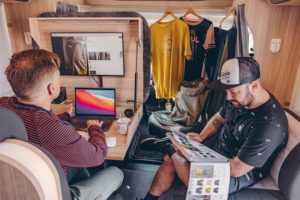
Working from campervan (WFC) has become a reality for some people, as they look for office space on their doorstep, but without the distractions posed by being inside the house.

And it’s not just those who already owned a campervan that have seen the potential, as there’s a growing number of individuals who have rented one solely for the purpose of getting work done undisturbed.

Sara Tasker, a business coach with a seven-year-old child, told the Metro that she hired a campervan to work in when the January lockdown was announced.

She had explored the idea of renting office space, but it didn’t suit her needs during the pandemic and she was feeling desperate for a way to be able to concentrate fully on her work.

Ms Tasker told the news provider: “There’s nothing else to do in there. I can’t do any housework, all I can do is focus.”

She has justified the expense of hiring a campervan to work from by totting up the amount of money she’s saved on not going on holiday or out for meals since the pandemic began.

Ms Tasker is not the only person taking advantage of the WFC trend, with rental company Quirky Campers having noticed people hiring their vans as offices recently.

Among such customers, there have been plenty of creatives – and especially writers – who require time away from homeschooling and other responsibilities to think clearly and produce results.

Since campervans tend to have a kitchen and a toilet, there’s no need to head back into the house and get embroiled in what’s going on in there during your working time.

Leisure vehicle bookings are currently not permitted for holidays as everyone is being asked to stay at home, but hiring them for work is allowed.

Saving energy and cash with your caravan

By William Coleman

Last week was Big Energy Saving Week 2021 (18th-22nd of January), and experts from different sectors have been sharing their top tips on how caravanners can save cash on their energy bills.

If there’s one thing to be said about the touring community, it’s that we are a mindful bunch who care about the environment and the areas we choose to travel to.

Saving energy is about more than just keeping the bank balance healthy, it’s also about conservation and keeping our planet healthy for future generations.

As conscious caravanners, you may want to invest in some new additions to the van that can help save you money and the planet at the same time.

These small changes, suggested by UKCaravans4Hire.com, could see you saving a few hundred pounds a year in energy costs.

Solar Power

Solar power is one of the best, and most popular, sources of renewable energy for homes across the globe. Why not add this method to your caravan?

In today’s world, there are downscaled solar panels that can be added to the van without adding too much extra weight – something we should all be mindful of when adding aftermarket fittings.

There are even certain leisure vehicle manufacturers that add solar panels to vans during production, so this is an accessible option – and one that the leisure industry is already very much onboard with.

Portable solar panels specifically designed for caravans usually generate around 60 W, 80 W or 120 W, depending on their size. If you are interested in adding solar power or buying a new van with it already equipped, speak to your local dealership – they should also have access to aftermarket panels.

Water saving gadgets

Wasted water is one thing that can happen easily – most of the time it goes unnoticed when touring. By installing water-saving devices, you can go about your business without having to pay too much attention to your water consumption.

Adding water-saving measures means you can reduce wastewater and disposal fees. Low-flow water devices can be attached to taps and showerheads to reduce the amount used. Shower timers can also be installed directly into shower pipes, if compatible with your current setup.

Making these changes to your leisure vehicles or homes can also allow park-home owners (static parks in particular) become eligible for the government’s £5,000 Green Homes Grant voucher to pay for the installation of energy-saving home improvements.

Gareth Irving, director of UKCaravans4Hire.com commented: “Making small changes throughout your property can create big savings on your energy bills. As many caravan owners use their caravans as second homes or purely as holiday properties, they mustn’t forget about the ongoing bills, such as those for energy, and consider how these can be brought down.”

It is not just the UK embracing vanlife in a Covid-ravaged world

By Emma Dodd

With the uncertainty of foreign travel that has come with the coronavirus pandemic, Brits have embraced the staycation and sales of motorhomes, caravans and campervans have been booming.

But it’s not just the population of the UK that has opted for holidays at home recently, as folks in Europe, the US and Australia have all been embracing the vanlife trend as borders close and travel corridors disappear.

Take Germany as an example, where motorhome registrations hit a record high in 2020 and show no sign of abating in the next 12 months.

According to the German Caravaning Industry Association, there were in the region of 80,000 newly registered motorhomes last year alone.

The situation is similar across the continent and manufacturers are taking note of the trend and looking carefully at the types of leisure vehicles that are proving popular.

Compact campervans that can be put to use for impromptu getaways, as well as driven on a day-to-day basis, are seen as the ultimate purchase in an unpredictable world.

Klaus Rehkugler, the new head of sales and marketing at Mercedes-Benz Vans, said: “We are very satisfied with the current order situation for our Marco Polo camper van family – in 2021 we want to sell around 25 per cent more of these vehicles.”

He went on to say that the brand intends to take advantage of a real potential for growth that it predicts is coming in subsequent years.

In Australia, there’s also an appetite for smaller leisure vehicles, as staycationers set out to explore their own backyard.

This is being driven by a desire to be more environmentally responsible and cost-conscious. It’s easier to heat and cool smaller motorhomes than vast RVs.

CNBC’s Jim Cramer summed up why the appetite for living the vanlife has been ignited all over the world in recent months.

He said: “Camping … is the perfect Covid vacation” and “you can still practice social distancing, especially if you’ve got an RV. One of these things lets you shelter in place and travel at the same time.”

Virtual review: The Bailey Unicorn Black Cadiz

By William Coleman

As the world becomes more virtual, we thought it was time to have a browse around Bailey’s online showroom to take a peek at the Unicorn Black range. After an online tour, we had our eyes firmly set on the all-new Cadiz.

The Cadiz was a standout model for us at CaravanTimes due to the spacious rear washroom and central kitchenette. This layout has a special place in our heart, as we used an almost identical model to travel all over Europe on a three-week press tour with Bailey.

This style of layout tends to be a popular option due to how well-spaced each area of the van is, especially when it comes to night-time living. Like most single-axle models there are some compromises on space; walking through bed areas to get to the washroom isn’t always ideal, but this van deals with these niggling issues well.

Exterior

Like all Bailey models, the Cadiz features the high-performance GRP skinned ‘Polar White’ Alu-Tech bodyshell. Whether your chosen destination is in the UK or further afield, this outer shell makes the Cadiz a van that’ll keep you cool when touring in the hot summer months.

In addition, because of its thermal properties, and Truma’s cold chamber testing, the Cadiz is also perfect for winter holidays, too. The van can withstand temperatures as low as minus 15 Celsius, and we should know – we tested it in the Arctic!

A new exterior feature for this year is the 14-inch alloy wheels that come with a graphite finish. The alloys are eye-catching, but they will require frequent cleaning to keep them looking showroom-sharp.

The new ‘Back Edition’ graphic scheme makes the Bailey branding stand out, this is unmistakably a Bailey van, but it is the interior that makes this caravan, all in all, a favourite of ours.

Interior

When it comes to Bailey’s van interior decor, they always play by the numbers and stick firmly to what they know sells, which is based heavily on market research and customer feedback.

Inside the Cadiz, you’ll find a mixture of light and dark colours that contrast well and create a modern feel while maintaining the core features of the classic caravan. This ‘modern-classic’ theme can be seen throughout all of Bailey’s leisure vehicles and they don’t have much competition when it comes to blending classic caravanning with modern interior styling.

Inside the living room, you’ll find the Brompton colour scheme soft furnishing on the sofa seating – this feels more classic than modern, while a shade or two darker grey may sit better – but this colour comes as standard, so you can customise this to your taste. This year there is the optional ‘Alperton’ soft furnishing to choose from, but this does come at an extra cost.

The overhead lockers have had a total makeover and may just be the standout change for 2021. The design team opted to introduce a new dual-colour cream gloss finish to the new Italian design lockers.

There is also a textured canvas strip on each overhead locker door that looks classy. However, this could become smudged and would need fairly regular polishing/cleaning due to the nature of the lockers and the usage they see. Wipe clean is always the best option inside a caravan, especially on surfaces that only ever get touched by hand.

Washroom and kitchenette

It’s in the kitchen area where you will find a new branded feature that is both practical for use and a great way to show Bailey’s branding power. The new black Perspex splashback highlights the model’s logo and chrome detailing.

As subtle as this new feature is, it makes a lot of difference to the styling of the kitchen. The light reflects from the Perspex and makes it look as though it’s independently lit by LEDs. These small additions are what we like to look out for; the smallest detail can influence the final buying decision.

This year seems to be the “Year of the Sink” as almost every major manufacturer has added different style basins in the kitchenette. Bailey opted for a stainless-steel, round kitchen sink with concealed fixings, swan-neck mixer tap, washing up bowl and drainer.

The Cadiz features a domestic-style rear washroom with a basalt stone finish. There has not been a huge change to the washroom, but it’s still one of the nicer bathrooms in a caravan in this price bracket. The shower cubicle is large and the wash basin’s size rivals one you find at home.

Night-time

The evening formation of this caravan is quite a common one; by day you have clear access to the entirety of the van, and come bedtime this can be sectioned off.

One thing we would like to see is a partition blind that would close off the two rear single beds from the living room, but that may interfere with the ease of access to the rear washroom. This is a tricky one, but it’s worth bearing in mind if you travel with light sleepers.

At the rear of the caravan, you have two static single beds and the lounge features two benches that can be made up into a large double.

Each bed features beech slat bases with sprung-hinged tops for extra comfort and ease of access to the under-bed storage compartments.

Verdict

Bailey’s new Cadiz is a well-made caravan that follows a long line of desirable Unicorn models and sits well in the current line up. Some caravan lovers think that four-berth single-axle models will not have enough space for a family of four, but having travelled around Europe in one of this layout’s predecessors, we can safely say this van can accommodate four adults with ease.

With an on-the-road price of £25,599, you are getting a high-quality van. There is stiff competition out there at this price range, but with Bailey, you know you are getting a van that has been extremely well tested. The vans are handmade right here in the UK at Bailey’s factory in Bristol, so you know you’re getting that Great British quality.

Tow car review: Land Rover Discovery SD6 Landmark

By William Coleman

Not all tow cars are equal and the new Land Rover Discovery Sport stands tall alongside a small number of luxury alternatives. After a few hundred miles of driving – pre-lockdown – we have some very strong opinions on this near-£60,000 tow car.

Caravans come in all shapes, sizes and weights and each van is uniquely loaded by its owner. You’ll need the right tow car to meet these specific towing needs and requirements. With the Land Rover Discovery Sport, you can tow the largest van and payload with absolute ease.

Make no mistake, this is one of the higher-end tow cars on the market and does come with a hefty price tag. The Discovery, or Disco as we like to call it, can set you back around £600 a month. We suggest doing your homework before committing. Take into consideration the vehicle’s kerb weight and any potential driving licence restrictions.

Driving and handling

CaravanTimes had the pleasure of testing the 3.0L V6 Twin Turbocharged Diesel 306HP model and it is an absolute beast, yes that is a good thing.

With a vehicle this heavy (2,311 kg), we were surprised at how well the vehicle adapted to every road surface. We went down all the roads you’d expect to find on your travels when testing, such as dirt tracks, roads with puddles and potholes, and the Disco didn’t even flinch.

This sports SUV can be a powerhouse on the motorway, as nimble as a hatchback in town, or down those smaller trickier roads. It is a fantastic example of the kind of vehicles that are being produced by Jaguar/Land Rover.

Under the bonnet, you have 306 horsepower to play with that provides a maximum torque of 700 Nm, so you will have very few worries towing a large six-berth twin-axle caravan.

One observation we made was the braking distance, and it has to be said, it was not the best. The Disco is weighty on its own, now add the caravan and you will need to preemptively brake to ensure you have a safe braking distance ahead of you.

The automatic eight-speed gearbox is a delight and could turn a lot of those avid manual drivers to the world or automatic driving. The word “effortless” comes to mind when breezing along in the Disco; at times it felt like this SUV drove itself.

Interior and exterior

As standard, the Disco comes with a gargantuan number of specifications that leave a lot of its competitors’ premium models in the wind. This is very much a luxury SUV that has everything you need to make this both the perfect town and tow car.

The exterior of this SUV is instantly recognisable and is sharp looking. It is a basic design, but there is beauty in its simplicity.

Inside is just like the Tardis; there is so much space that you will not know what to do with it. The rear passenger seats are well spaced and can be divided by a pull down armrest. Cupholders and a large surface can be used for leaning, resting tablets, or just simply as an extra bit of surface, to keep the footwells clear.

If you are going on those long drives, be prepared for one of the most comfortable journeys you are likely to take. The seats are large and soft and are extremely well made. The leather is soft with cushioning that has a firmness to it that feels more like memory foam than your conventional seating sponge. When driving, be ready for the passengers to nod off thanks to its high levels of comfort.

This model is the Landmark edition that features some unique specs:

  • Fixed front and rear panoramic roof
  • Dynamic exterior design pack featuring narvik black accents
  • 20-inch five split-spoke style 5011 gloss black finish alloy wheels
  • Landmark edition badge
  • Privacy glass
  • Signature hi-line tail lights
  • Front fog lights
  • Satin brushed aluminium vertical finisher
  • MeridianT sound system 380 W

Optional premium extras:

  • Farallon black premium metallic paint – £1,695
  • Acorn and ebony interior
  • Heated front and rear seats – £325
  • Surround camera system – £635
  • Detachable tow bar – £765
  • Advanced tow assist – £375
  • Advanced Off-Road Capability pack: Active rear locking differential, terrain response two, all-terrain progress control (ATPC) – £1,125
  • 21-inch 10 split-spoke “Style 1012” gloss black finish – £1,590
  • 21-inch full sized spare – £100

Verdict

You can see that some people may be put off by the size of the Discovery, but the performance will soon dismiss any doubt. After racking up a few miles, you will realise that the size of this SUV is not an issue and is actually a positive. With this tow car’s size comes safety and comfort.

With an on-the-road price of £59,995 (£66,605 with all the bells and whistles), you are getting a lot of vehicle for your money. Depending on your specific needs, you may find a cheaper 4×4 or saloon/estate car that does the job without such a high cost.

As far as performance goes, the Disco is outstanding. Towing is a dream and you may never want to use another tow car again.

Northumberland anticipates surge in motorhome holidays this summer

By Emma Dodd

Motorhome stays on the Northumberland coast are expected to soar this summer, as visitors embrace staycations after the height of the coronavirus pandemic.

Councillors discussed the implications of a sudden surge of tourists in a meeting of the Beadnell Parish Council, reports the Northumberland Gazette.

The local county council brought together key stakeholders at a coastal summit last year, after a relaxation in Covid rules saw an influx of visitors to the area.

They are starting to make plans for more seasonal parking and campervan facilities to accommodate a similar influx of people this summer.

Among the most popular locations in Northumberland for motorhome enthusiasts are Bamburgh, Seahouses, Beadnell, Craster, Boulmer, Alnmouth and Amble, all of which have struggled with tourism-related issues in the past.

Councillor Michael Dawson said: “The DVLA figures for 2020 show registrations of motorhomes up 71 per cent on the previous year and, in August, up 41 per cent and that’s with the uncertainty of lockdowns and the economy.

“I think it’s on the back of lots of people looking at staycations so whether we like it or not, it’s a fact these motorhomes are coming.”

Northumberland is a county of beautiful coastline and imposing castles, making it an attractive prospect for a caravan holiday.

Countryfile awarded National Park of the Year to Northumberland in 2020, demonstrating how its reputation is growing throughout the rest of the UK.

In order to ensure its natural beauty is not spoilt, it’s important that tourism is managed in a sustainable way and that includes provision for motorhomes.

Is Northumberland on your list of destinations to visit if travel restrictions are lifted this summer? Let us know in the comments.